
Practice
The HEMA school
Longsword, spear and dusack — as a martial art and a research discipline, not a combat sport.
Enter the school →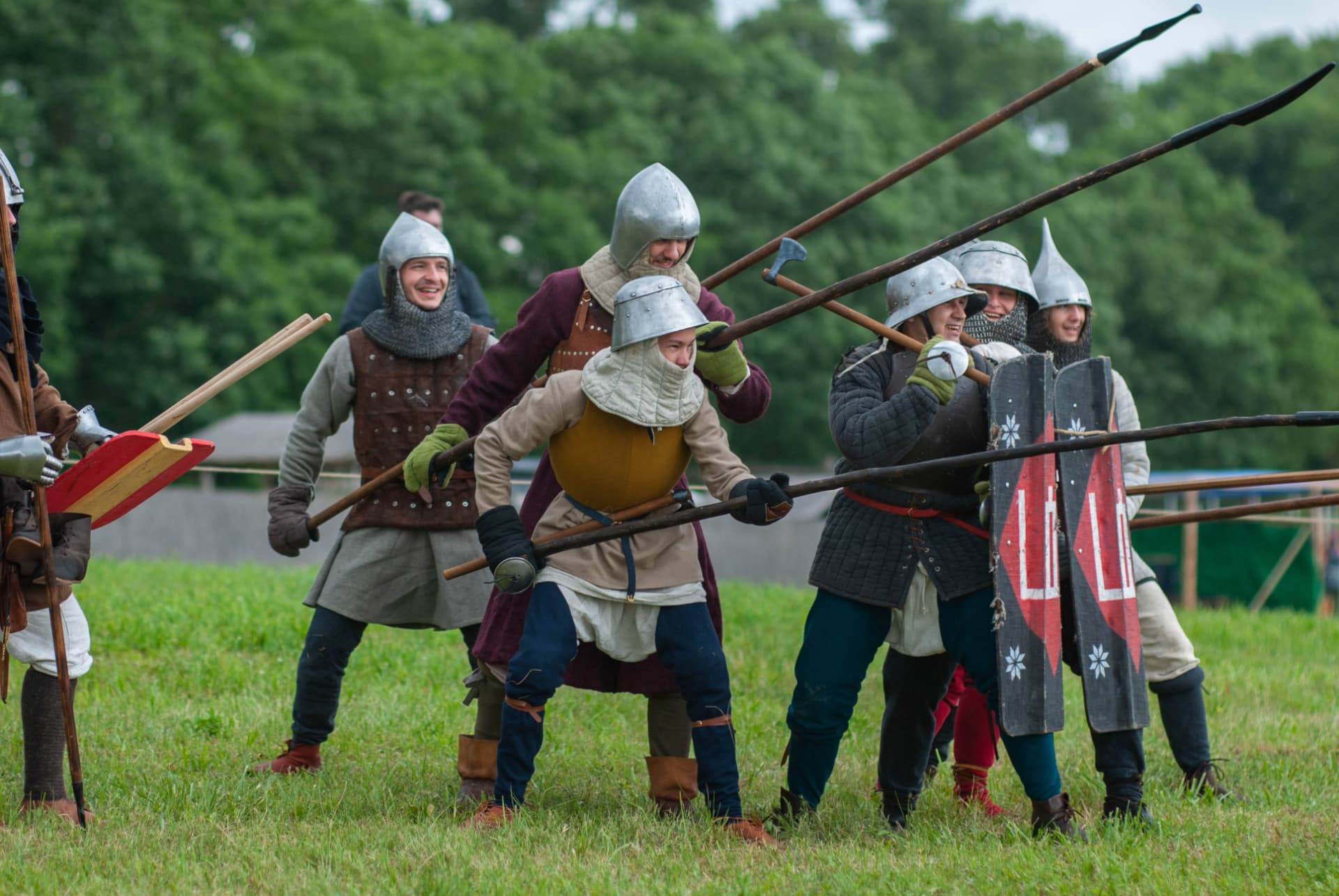

History is not only studied. It is lived.
Longsword, spear and dusack in the training hall; armour, camps and festivals in the field. The medieval Ruthenian world, studied from the sources and tested in practice.
Chapter I — Discover
We are not a fantasy troupe and not a costume company. Atira Ruthenia stands at the intersection of history, research, martial culture, craftsmanship and community. Everything we present in public begins in written sources, archaeological reports and museum collections.
Practice
Longsword, spear and dusack — as a martial art and a research discipline, not a combat sport.
Enter the school →Reenactment
Every garment, buckle, seam and rivet is argued from evidence. Where the evidence runs out, we say so.
Into the workshop →"Imperare sibi maximum imperium est."
To master yourself is the greatest victory.
What we do
Longsword, spear and dusack, studied from period fight books and sources.
Metal, leather, wood and textiles — objects argued from finds and manuscript evidence.
Primary sources, archaeology and museum collections, published back to the community.
Camps, cooking, everyday material culture and experimental archaeology in the field.
Follow us
Our news
announcement
report
report
Collaborations
Real collaboration stories with museums, festivals, educational institutions and HEMA communities — with the relationship explained and public evidence where available.
FAQ
Voices
“The team showed exceptional historical accuracy in everything they did, from their daily camp activities to their reconstruction of a late 14th-century Ruthenian noble household. Their workshops were consistently full and engaging… Atira Ruthenia is a welcome and valuable partner for any event that brings history to life.”
 Austėja LuchtanaitėFestival Project HeadState Cultural Reserve of Kernavė — Days of Live Archaeology, July 2026
“The participation of the representatives and reenactors of Atira Ruthenia was a significant contribution to this cultural and educational event… Thanks to your professional work in historical reconstruction, festival visitors were able not only to learn about historical eras, but also to feel their atmosphere through the recreation of the culture, everyday life and traditions of past centuries. (Translated from Ukrainian)”
 Oleksandr AlforovChairpersonUkrainian Institute of National Memory — Festival at the Museum of Kyiv History
“Atira Ruthenia's work is grounded in a research-based approach. It combines practical reconstruction, cooperation with museums and educational outreach… Over the years of cooperation, Atira Ruthenia has proven to be a responsible and professional partner.”
 Yarema IvantsivHead of the NGONGO “Chorna Galych” — Cooperation since 2014 · TuStan! and Kernavė
“We at Dublin HEMA love hosting fellow fencer from abroad whenever fate brings them to Ireland. When Bohdan was over we were able to train together, exchange training/drill ideas, and of course, spar a little. It was an absolute pleasure to have him there, as an ambassador of Atira Ruthenia, as our first visitor from Ukraine, and hopefully not the last!”
 SeifLongsword Coach & Committee SecretaryDublin HEMA Club — Training exchange, Dublin, June 2026
“Atira Ruthenia brings together historical reenactment, research, historical fencing and educational activities, helping people of different ages discover and better understand Ukraine's history and cultural heritage. The team takes a responsible, professional approach to organising events… and engages effectively with communities and audiences.”
 Bilohorodka AdministrationLocal authority · Kyiv Region, Ukraine
“Their team combines strong historical knowledge with careful attention to authenticity, while presenting the past in a way that is engaging and accessible to a broad audience… They create a living historical experience that visitors and participants genuinely remember.”
 Anga TravelDirector
Book us
Talks, photo zones, masterclasses, medieval dancing, craft workshops and HEMA combat displays, shaped to your site.
Book usClassroom visits on medieval life, weapons and warfare, clothing and society, Ruthenia and Europe, and hands-on living history.
Education programmesJoin the club — training, workshop, camps and research in Kyiv, with the Ireland branch now forming.